
Contact

Category: AI

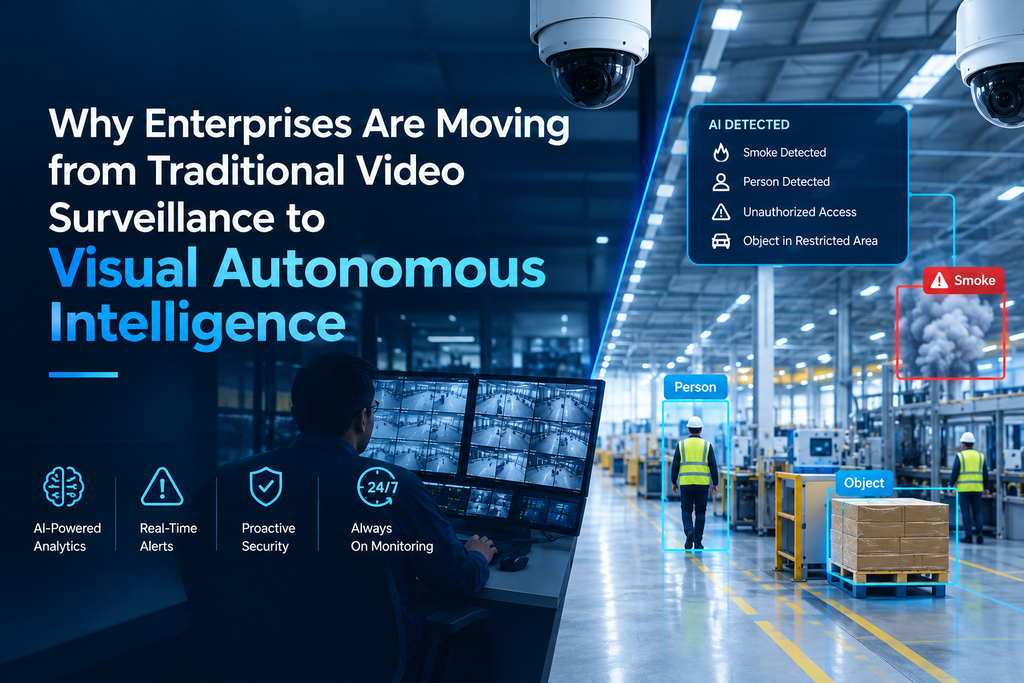
  • Why Enterprises Are Moving fromTraditional Video Surveillance to VisualAutonomous Intelligence

    Traditional video surveillance has long been a critical part of enterprise security. Cameras are installed across offices, factories, warehouses, retail spaces,campuses and other facilities to monitor activities and protect assets. However, conventional surveillance systems largely depend on humans to watch video feeds, identify incidents and decide what action to take.

    As enterprises become more complex, this approach is no longer enough.

    Visual Autonomous Intelligence (VAI) is changing how organizations use their existing camera infrastructure. Instead of simply recording what happened, VAI continuously analyzes visual data, identifies risks, generates intelligent alerts and helps enterprises respond faster.

    What Is Visual Autonomous Intelligence?

    Visual Autonomous Intelligence is an AI-powered approach that enables cameras and video systems to understand what is happening in real time and support automated decision-making.

    Unlike traditional CCTV surveillance, which primarily captures and stores video, a Visual Autonomous Intelligence platform uses artificial intelligence, computer vision, edge computing, and analytics to interpret activities and identify important events.

    This allows enterprises to move from “watching video” to “understanding what is
    happening.”

    For example, an intelligent visual system can identify situations such as:

    • Unauthorized access
    • Intrusion into restricted areas
    • Fire and smoke indicators
    • PPE violations
    • Unsafe workplace behavior
    • Crowd formation
    • Suspicious activities
    • Vehicle and traffic-related incidents
    • Operational process deviations
    • Camera or system health issues

    The objective is not simply to generate more alerts. It is to provide relevant, actionable intelligence that helps teams detect, decide and respond.

    Why Is Traditional Video Surveillance No Longer Enough?

    Traditional surveillance creates a large amount of video data, but most of that data remains passive. Security teams may have hundreds or thousands of cameras operating simultaneously.Monitoring every feed continuously is difficult, and human operators can miss important events because of fatigue, distraction, or information overload. Traditional systems also tend to be reactive. An incident occurs, someone notices it, and the team investigates the recorded footage after ward.This creates a significant gap between event occurrence and response.Modern enterprises need systems that can identify critical events as they happen rather than depending entirely on manual monitoring.

    From Video Recording to Real-Time Visual Intelligence

    One of the biggest changes introduced by Visual Autonomous Intelligence is the ability to convert video into actionable information.Instead of requiring an operator to continuously watch multiple screens, AI-powered video analytics can analyze camera feeds in real time. When a predefined risk or unusual activity is detected, the system can generate an alert and provide relevant information to the responsible team.This can help organizations reduce detection time and improve operational awareness.


    For example, in a manufacturing facility, a traditional camera may record an employee entering a restricted zone. A VAI platform can identify the unauthorized entry, trigger an alert, and help security personnel respond immediately. This transition from recording → monitoring → understanding → action represents a
    major evolution in enterprise surveillance.

    How Visual Autonomous Intelligence Helps Enterprises

    1. Faster Threat Detection

    AI-powered visual analytics can continuously monitor camera feeds and identify
    predefined risks in real time. This can significantly reduce the time required to detect
    security, safety, and operational incidents. Faster detection can lead to faster response and potentially reduce the impact of an incident.

    2. Reduced Dependence on Manual Monitoring

    Human monitoring remains valuable, but relying entirely on people to watch hundreds of video feeds is inefficient. VAI works as an intelligent layer that continuously analyzes visual information and highlights events that require attention.

    This allows security and operations teams to focus on high-priority incidents instead
    of watching screens continuously.

    3. Better Workplace Safety

    Visual intelligence can help organizations identify safety-related conditions such as
    missing protective equipment, unauthorized access to hazardous areas, unsafe
    movement, or unusual crowd behavior.
    By detecting these conditions earlier, enterprises can take preventive action rather than waiting for an accident to occur.

    4. Turning Existing Cameras into Business Intelligence Assets

    Enterprises do not necessarily need to replace their entire camera infrastructure to
    adopt intelligent surveillance. Modern Visual Autonomous Intelligence platforms can work with existing camera networks and add an intelligence layer over the available visual data. This makes existing surveillance infrastructure more valuable by transforming cameras from passive recording devices into sources of real-time business intelligence.

    5. Improved Operational Visibility

    Visual intelligence is not limited to security Enterprises can use visual data to understand operational processes, monitor facilities, identify bottlenecks, and improve compliance. This makes VAI relevant to security teams, facility managers, operations leaders, safety teams, and enterprise decision-makers.

    Why Enterprises Are Moving Toward Autonomous Intelligence

    The growth of AI, IoT, edge computing, and connected enterprise systems is changing expectations around surveillance. Enterprises increasingly want systems that can do more than collect data. They want technology that can analyze information, identify patterns, prioritize events, and support faster decisions.
    This is where Visual Autonomous Intelligence becomes strategically important.
    A VAI platform can create a continuous intelligence cycle:


    Detect → Analyze → Decide → Respond


    Instead of treating surveillance as an isolated security function, enterprises can
    connect visual intelligence with broader operational workflows.

    The Future of Enterprise Video Surveillance

    The future of enterprise surveillance is moving beyond cameras, monitors, and storage. As organizations adopt AI-driven technologies, visual intelligence is becoming an important component of modern enterprise infrastructure. Businesses can use their existing visual data to improve security, safety, operational efficiency, and decision making.

    Visual Autonomous Intelligence transforms surveillance from a passive recording
    system into an active intelligence platform.

    For enterprises looking to modernize their security and operational infrastructure, the
    key question is no longer simply:

    “How many cameras do we have?”


    The more important question is:


    “What intelligence can our cameras provide?”


    Platforms such as XEye360 are designed around this shift, helping enterprises
    transform existing camera networks into intelligent systems capable of detecting risks, generating actionable insights, and supporting faster responses.

    Frequently Asked Questions About Visual Autonomous Intelligence

    What is Visual Autonomous Intelligence?


    Visual Autonomous Intelligence is an AI-driven technology that analyzes video and visual data in real time to detect events, identify risks, generate insights, and support faster decision-making.

    How is VAI different from CCTV surveillance?


    Traditional CCTV primarily records and displays video for human monitoring. VAI uses artificial intelligence and computer vision to analyze video automatically and identify events that require attention.

    Can Visual Autonomous Intelligence work with existing cameras?


    Yes. Depending on the platform and camera infrastructure, VAI solutions can integrate with existing surveillance networks, allowing enterprises to add AI-powered intelligence without necessarily replacing all their cameras.

    Where can Visual Autonomous Intelligence be used?


    VAI can be used across manufacturing plants, warehouses, corporate offices, retail environments, healthcare facilities, educational institutions, transportation facilities, data centers, and large enterprise campuses.

    Does VAI replace security personnel?


    No. VAI is designed to support security and operations teams by continuously analyzing visual data and highlighting important events. Human teams can then make informed decisions and take appropriate action.

    Conclusion

    Traditional video surveillance helped enterprises see what was happening. Visual Autonomous Intelligence helps them understand what is happening and respond faster.

    As organizations manage larger facilities, more cameras, growing security requirements, and increasingly complex operations, passive surveillance alone may not provide the visibility they need.

    The next generation of enterprise surveillance is therefore moving toward AI powered video analytics, real-time visual intelligence, autonomous detection, and intelligent response.

    For enterprises, the opportunity is significant: transform existing camera infrastructure into a powerful source of real-time intelligence, operational visibility, safety improvement, and faster decision-making.

    Detect. Decide. Respond.
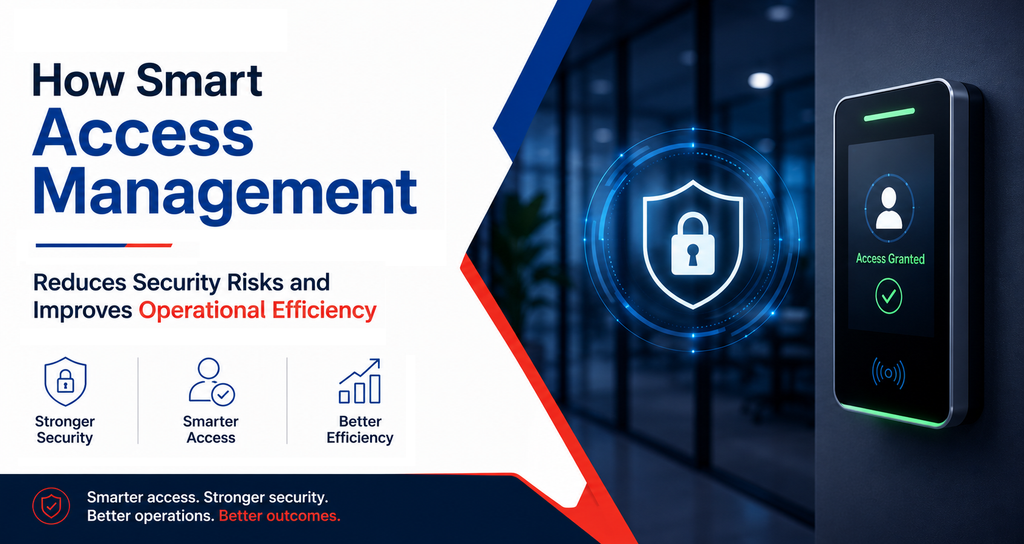
  • How Smart Access Management Reduces Security Risks and Improves Operational Efficiency

    Security and operational efficiency are two of the most important priorities for modern organisations. Offices, manufacturing facilities, warehouses, hospitals, educational institutions, residential communities, and commercial buildings need to control who can enter their premises while ensuring that authorised employees and visitors can move efficiently.

    Traditional access methods such as physical keys, access cards, and manual visitor
    registers can create security gaps and operational challenges. Lost cards, unauthorized entry, outdated access permissions, and limited visibility into movement can make it difficult for organizations to maintain effective security.

    This is where Smart Access Management can make a significant difference.

    Smart Access Management is a technology-driven approach to controlling, monitoring and managing access to physical facilities using intelligent security technologies,centralized controls, and real-time information. It helps organizations improve security, simplify access administration, and create better visibility across their facilities.

    For businesses looking to strengthen physical security while improving operational
    efficiency, a smart access control system can become an important part of their
    overall security infrastructure.

    What Is Smart Access Management?

    Smart Access Management refers to the use of modern technologies to manage access to buildings, facilities, restricted areas and other physical locations.

    Depending on the organization’s requirements, a smart access management solution can integrate technologies such as:

    • Access control systems
    • Smart security terminals
    • RFID and access cards
    • Biometric authentication
    • Mobile-based access
    • Visitor management
    • Centralized security consoles
    • Real-time monitoring
    • Automated alerts
    • Access logs and reports

    Instead of relying entirely on manual processes, organizations can use intelligent
    access management to automate access decisions and monitor activity across their
    facilities.

    How Does Smart Access Management Reduce Security Risks?

    1. Prevents Unauthorized Access

    One of the primary benefits of smart access management is controlling who can enter a facility or restricted area.

    Traditional keys can be copied or lost, while access cards can be misplaced or shared. A smart access control system can use authentication methods such as biometrics, credentials, mobile devices, or access cards to verify users.

    Organizations can define access permissions based on employees, departments, roles, locations and time periods.

    This makes it easier to ensure that only authorized individuals can access sensitive
    areas.

    2. Provides Real-Time Access Visibility

    Security teams need to know what is happening inside their facilities.

    A modern access management solution can provide real-time information about
    access events, including successful entries, denied attempts, and other relevant
    activities.

    This visibility can help security teams identify unusual access behaviour and respond to potential risks more quickly.

    Instead of relying only on manual registers or periodic checks, organizations can have a centralized view of access activity.

    3. Makes Employee Access Easier to Manage

    Employee roles and responsibilities change frequently.

    An employee may move to another department, leave the organization, or require
    access to a different facility.

    With traditional systems, updating permissions manually can create delays or security gaps.

    Smart Access Management enables administrators to update, modify, or revoke
    access permissions more efficiently.

    When an employee leaves the organisation, access can be revoked promptly. When
    responsibilities change, permissions can be updated according to the new role.

    4. Improves Visitor Management

    Visitors, contractors, vendors, and temporary workers can create additional access
    management challenges.

    Manual visitor registers may provide limited visibility and can be difficult to maintain
    accurately.

    An integrated visitor management and access control system can help organisation
    register visitors, verify information, issue temporary access, and maintain digital
    records.

    This creates a more organised visitor experience while improving security visibility.

    How Smart Access Management Improves Operational Efficiency

    Security is not the only benefit. Smart access management can also improve everyday facility operations.

    1. Reduces Manual Administrative Work

    Managing physical keys, access cards, visitor registers, and permission requests
    manually can consume significant administrative time.

    A centralized access control management system can automate many routine
    activities.

    Security administrators can manage users, permissions, access schedules, and
    reports from a centralized interface.

    This allows security teams to spend less time on repetitive administrative tasks and
    more time on important security activities.

    2. Enables Centralized Facility Management

    Organizations with multiple buildings or locations may face additional challenges when access systems operate independently.

    A centralized smart access management solution can provide greater visibility across different facilities.

    Security teams can manage access permissions, monitor events, and review reports
    through a unified security environment.

    This can be particularly valuable for enterprises, corporate campuses, manufacturing
    facilities, and organizations with distributed locations.

    3. Improves Employee Experience

    Security systems should protect facilities without creating unnecessary inconvenience for employees.

    Long queues, complicated authentication processes, or frequent access issues can
    negatively affect productivity.

    Modern smart access control systems can provide convenient authentication options
    while maintaining appropriate security controls.

    Faster and more reliable access can improve the employee experience and reduce
    interruptions to daily operations.

    4. Supports Better Security Decision-Making

    Data is increasingly important to modern security operations.

    Smart access management systems can generate access records and reports that help organizations understand access patterns and identify potential security concerns.

    Security teams can use this information to review:

    • Unauthorized access attempts
    • Access outside normal working hours
    • Repeated denied entries
    • High-risk areas
    • Visitor activity
    • User access history

    This creates a more informed approach to physical security management.

    Smart Access Management for Different Industries

    Smart access management can support a wide range of environments.

    • Corporate offices : Manage employee and visitor access while protecting
      restricted departments.
    • Manufacturing facilities : Control access to production areas, warehouses, and
      sensitive operational zones.
    • Hospitals : Manage access to restricted medical and administrative areas.
    • Educational institutions : Control access across classrooms, laboratories,
      administrative areas, and campuses.
    • Warehouses : Restrict access to inventory and high-value storage areas.
    • Residential communities : Manage resident, visitor, staff, and service-provider
      access.
    • Data Centers : Provide strict access control for highly sensitive infrastructure.

    The exact implementation depends on the organization’s security requirements, facility structure, workforce, and compliance needs.

    Choosing the Right Smart Access Management Solution

    Before implementing a smart access management solution, organizations should
    consider several factors.

    Integration

    The solution should integrate with existing security infrastructure where appropriate,
    including surveillance, visitor management, alarms, and other facility systems.

    Scalability

    The system should support future growth, additional users, locations, and access
    points.

    Centralized Management

    Security teams should have a convenient way to manage users, permissions, events and reports.

    Security

    Authentication, user permissions, data protection, and system security should be
    carefully considered.

    Ease of Use

    The system should be simple enough for administrators, employees, and visitors to use effectively.

    How EvolveCortex Helps Organizations Improve Access Security

    EvolveCortex Solutions provides technology-driven security solutions designed to help organizations create safer and smarter facilities.

    Its XSecure Smart Access Management approach combines modern access
    technologies with intelligent security management to support controlled and efficient
    facility access.

    The solution can help organizations manage access, improve security visibility, and
    simplify administration across different facility environments.

    By integrating intelligent access management with broader security technologies,
    organizations can move toward a more connected and proactive approach to physical security.

    Conclusion

    Smart Access Management provides organizations with a more intelligent and
    efficient way to secure facilities while managing everyday access requirements.

    By replacing fragmented and manual processes with centralized access control, realtime visibility, intelligent authentication, and automated management, businesses can reduce security risks while improving operational efficiency.

    As organizations continue to adopt connected security technologies, smart access
    control systems and intelligent access management solutions are becoming an
    important component of modern facility security.

    For organizations looking to create a safer, smarter, and more efficient facility,
    investing in the right access management technology can provide long-term security
    and operational benefits.

    Looking to improve facility security with Smart Access Management? Explore
    EvolveCortex Solutions and discover how XSecure can help your organization create a more secure and smarter access environment.

    Frequently Asked Questions

    What is Smart Access Management?

    Smart Access Management is a technology-based approach to controlling and
    monitoring access to physical facilities using intelligent authentication, centralized
    management, real-time monitoring, and digital access records.

    How does Smart Access Management improve security?

    It helps reduce unauthorized access by verifying users, controlling permissions,
    monitoring access events, and enabling organizations to quickly modify or revoke
    access.

    What is a smart access control system?

    A smart access control system is a modern security solution that manages entry to
    buildings and restricted areas using technologies such as biometrics, access cards,
    mobile credentials, smart terminals, and centralized software.

    Can Smart Access Management improve operational efficiency?

    Yes. It can reduce manual administrative work, simplify access management, improve visitor handling, provide centralized visibility, and help security teams respond to access-related events more efficiently.

    Where can Smart Access Management be used?

    Smart access management can be used in corporate offices, manufacturing facilities,warehouses, hospitals, schools, residential communities, commercial buildings, and data centers.

  • Latest Trends in AI and Software Development for 2025

    Latest Trends in AI and Software Development for 2025

    As we step into 2025, the landscape of artificial intelligence (AI) and software development is undergoing a profound transformation. With rapid advancements in technology, businesses are adapting to new methodologies and tools that enhance efficiency, security, and user experience. This blog delves into the latest trends shaping these fields, providing insights that can help organizations stay competitive in an increasingly digital world.

    1. Generative AI: Revolutionizing Software Development

    Generative AI has emerged as a game-changer in software development. This technology enables developers to automate various coding tasks, significantly reducing the time and effort required to produce high-quality software. Tools like ChatGPT and GitHub Copilot are leading the charge, allowing developers to generate code snippets, debug existing code, and even create entire applications based on simple user instructions.

    Key Benefits:

    • Increased Efficiency: Automating repetitive tasks allows developers to focus on more complex problems.
    • Enhanced Creativity: Generative AI can suggest innovative solutions and design patterns that developers might not have considered.
    • Reduced Errors: By automating code generation, the likelihood of human error is minimized, leading to higher quality software.

    As organizations increasingly adopt generative AI tools, they will see improved productivity and faster time-to-market for their applications.

    2. The Shift Towards Low-Code/No-Code Platforms

    The rise of low-code and no-code platforms is democratizing software development. These platforms enable users with little to no programming experience to create applications through visual interfaces and pre-built components. As a result, businesses can accelerate their development processes and empower non-developers to contribute to application creation.

    Advantages:

    Faster Development Cycles: Teams can quickly prototype and deploy applications without extensive coding.

    Cost-Effective Solutions: Reduces the need for large development teams, lowering overall project costs.

    Increased Collaboration: Encourages collaboration between IT and business units, fostering innovation.

    This trend is particularly beneficial for organizations looking to adapt quickly to changing market demands while minimizing resource expenditure.

    3. Edge Computing: Enhancing Real-Time Data Processing

    Edge computing is becoming increasingly relevant as businesses seek to process data closer to its source. By moving computation away from centralized data centers and closer to edge devices, organizations can achieve lower latency, improved performance, and enhanced security.

    Impact on Software Development:

    Real-Time Analytics: Applications can process data in real-time, enabling immediate decision-making.

    Improved User Experience: Faster response times lead to better user interactions with applications.

    Enhanced Security: By keeping sensitive data closer to its source, organizations can mitigate risks associated with data breaches.

    As edge computing continues to evolve, it will play a crucial role in the development of IoT applications and real-time analytics solutions.

    4. Quantum Computing: A New Frontier

    Although still in its infancy, quantum computing is poised to revolutionize software development by enabling unprecedented computational power. Developers are beginning to explore algorithms specifically designed for quantum environments, which could lead to breakthroughs in various fields such as cryptography, pharmaceuticals, and materials science.

    Potential Applications:

    Complex Problem Solving: Quantum computers can tackle problems that are currently infeasible for classical computers.

    Enhanced Security Protocols: Quantum-safe encryption methods are being developed to protect data from future quantum attacks.

    Innovative Algorithms: New algorithms leveraging quantum mechanics could transform industries by optimizing processes at scale.

    As research progresses, quantum computing will likely become an integral part of software development strategies for forward-thinking organizations.

    5. Ethical AI: Balancing Innovation with Responsibility

    With the rapid advancement of AI technologies comes the responsibility to ensure ethical practices in their development and deployment. Organizations are increasingly focusing on ethical AI principles that prioritize transparency, fairness, and accountability.

    Key Considerations:

    Bias Mitigation: Efforts are being made to identify and reduce biases in AI algorithms that could lead to unfair treatment of individuals or groups.

    Transparency: Organizations are striving for greater transparency in how AI models make decisions, fostering trust among users.

    Regulatory Compliance: Adhering to evolving regulations surrounding AI usage is becoming essential for businesses.

    By prioritizing ethical considerations in AI development, organizations can build trust with their users while harnessing the power of these technologies responsibly.

    Conclusion

    The trends shaping AI and software development in 2025 reflect a dynamic interplay between innovation and responsibility. From generative AI transforming coding practices to ethical considerations guiding AI deployment, businesses must stay informed about these developments to remain competitive. By embracing these trends—such as low-code platforms, edge computing advancements, quantum computing potential, and ethical AI practices—organizations can position themselves at the forefront of technological progress, ensuring they meet the demands of an ever-evolving digital landscape.

    Incorporating these insights into your strategic planning will not only enhance operational efficiency but also foster innovation that drives sustainable growth in the years ahead.

  • The Future of AI and Software Development: Key Trends for 2025

    The Future of AI and Software Development: Key Trends for 2025

    As we progress into 2025, the fields of artificial intelligence (AI) and software development are witnessing unprecedented changes that promise to reshape industries and redefine user experiences. This blog explores the most significant trends in AI and software development, providing insights into their implications for businesses, developers, and consumers alike.

    1. AI-Driven Personalization

    Personalization has become a cornerstone of user engagement, and AI is at the forefront of this trend. In 2025, businesses are increasingly leveraging AI algorithms to deliver tailored experiences based on individual user preferences, behaviors, and interactions. This shift is particularly evident in sectors like e-commerce, entertainment, and digital marketing.

    Key Benefits:

    Enhanced User Engagement: Personalized recommendations lead to higher conversion rates and customer satisfaction.

    Improved Retention Rates: By delivering relevant content and products, businesses can foster loyalty among users.

    Data-Driven Insights: AI analyzes vast datasets to uncover trends and preferences, enabling businesses to refine their strategies continuously.

    As organizations adopt AI-driven personalization strategies, they will be better equipped to meet the diverse needs of their customers.

    2. Increased Collaboration Between Humans and AI

    The collaboration between humans and AI systems is evolving into a more integrated partnership. In 2025, we expect to see AI augmenting human capabilities rather than replacing them. This trend is particularly evident in creative fields, where AI tools assist designers, writers, and marketers in generating ideas and refining their work.

    Impacts on Workflows:

    Creative Assistance: AI can provide inspiration by suggesting design elements or content structures based on existing data.

    Decision Support: AI systems can analyze complex datasets to offer actionable insights that inform strategic decisions.

    Skill Enhancement: Professionals can leverage AI tools to enhance their skills, allowing them to focus on higher-level tasks.

    This collaborative approach not only boosts productivity but also fosters innovation across various sectors.

    3. Rise of Autonomous Systems

    The development of autonomous systems—machines that can perform tasks without human intervention—is gaining momentum in 2025. These systems are being utilized in various applications, from self-driving vehicles to automated supply chain management. Advances in machine learning and sensor technology are driving this trend forward.

    Key Applications:

    Transportation: Autonomous vehicles promise to revolutionize logistics and personal transportation by enhancing safety and efficiency.

    Manufacturing: Automated production lines improve efficiency while reducing human error.

    Agriculture: Drones and autonomous machinery are transforming farming practices by optimizing resource use and increasing yields.

    As autonomous systems become more sophisticated, they will significantly impact how industries operate, leading to increased efficiency and reduced operational costs.

    4. Enhanced Focus on Explainable AI (XAI)

    As AI systems become more complex, the demand for transparency in how these systems make decisions is growing. Explainable AI (XAI) aims to make AI models more interpretable by providing insights into their decision-making processes. In 2025, we expect organizations to prioritize XAI to build trust with users and comply with regulatory requirements.

    Benefits of XAI:

    Increased Trust: Users are more likely to adopt AI solutions when they understand how decisions are made.

    Regulatory Compliance: XAI helps organizations adhere to regulations that require transparency in automated decision-making processes.

    Improved Model Performance: Understanding model behavior allows developers to refine algorithms for better accuracy.

    By focusing on explainability, organizations can enhance user confidence in their AI solutions while ensuring ethical practices are upheld.

    5. Sustainability Through Technology

    Sustainability is becoming a critical consideration in software development as organizations seek ways to minimize their environmental impact. In 2025, we anticipate a growing emphasis on developing energy-efficient algorithms and sustainable practices within the tech industry.

    Key Strategies:

    Green Coding Practices: Developers are adopting coding techniques that reduce energy consumption during execution.

    Sustainable Data Centers: Companies are investing in eco-friendly infrastructure that minimizes carbon footprints.

    AI for Sustainability: Organizations are leveraging AI to optimize resource use across various sectors, from energy management to waste reduction.

    By prioritizing sustainability in technology development, businesses can contribute positively to the environment while meeting consumer demand for responsible practices.

    Conclusion

    The trends shaping AI and software development in 2025 reflect a dynamic landscape characterized by innovation, collaboration, and responsibility. From personalized user experiences driven by AI algorithms to the rise of autonomous systems transforming industries, businesses must adapt to these changes to remain competitive. By prioritizing explainable AI and sustainable practices, organizations can build trust with users while contributing positively to society.

    Staying abreast of these trends will empower businesses not only to enhance operational efficiency but also to drive meaningful change as they navigate the complexities of an increasingly digital world. Embracing these advancements will position organizations for success in the evolving technological landscape of 2025 and beyond.

  • Exploring the Latest Trends in AI and Software Development for 2025

    Exploring the Latest Trends in AI and Software Development for 2025

    As we venture further into 2025, the intersection of artificial intelligence (AI) and software development continues to evolve at an astonishing pace. These advancements are not only reshaping how software is created but also transforming industries and enhancing user experiences. This blog highlights key trends that are set to dominate the landscape of AI and software development, offering insights into their implications for businesses and developers alike.

    1. AI-Powered DevOps: Streamlining Development Processes

    The integration of AI into DevOps practices is revolutionizing the software development lifecycle. AI-powered tools are being utilized to automate various stages of development, from coding and testing to deployment and monitoring. By leveraging machine learning algorithms, these tools can analyze vast amounts of data to identify patterns, predict outcomes, and optimize workflows.

    Benefits:

    Faster Deployment: Automated testing and continuous integration/continuous deployment (CI/CD) pipelines reduce time-to-market.

    Enhanced Quality Assurance: AI can detect bugs and vulnerabilities earlier in the development process, leading to higher-quality software.

    Predictive Analytics: By analyzing historical data, AI can forecast potential issues before they arise, allowing teams to proactively address them.

    This trend is making DevOps more efficient and responsive, enabling organizations to deliver better products faster.

    2. Natural Language Processing (NLP) Advancements

    Natural Language Processing (NLP) is experiencing significant advancements that are enhancing user interactions with software applications. In 2025, we expect to see more sophisticated NLP models that can understand context, sentiment, and intent with greater accuracy. This evolution will lead to improved conversational interfaces, chatbots, and virtual assistants.

    Key Impacts:

    Improved User Experience: Applications will provide more intuitive interactions, making it easier for users to find information and complete tasks.

    Enhanced Accessibility: NLP technologies can help bridge communication gaps for users with disabilities or language barriers.

    Data Insights: Businesses can leverage NLP to analyze customer feedback and sentiment across various platforms, informing product development and marketing strategies.

    As NLP continues to advance, it will play a crucial role in creating more engaging and responsive software solutions.

    3. Blockchain Technology in Software Development

    Blockchain technology is gaining traction as a secure method for managing data integrity in software applications. In 2025, we expect more developers to incorporate blockchain into their projects, particularly in sectors like finance, supply chain management, and healthcare. The decentralized nature of blockchain enhances security while providing transparency in transactions.

    Advantages:

    Increased Security: Blockchain’s cryptographic features make it difficult for unauthorized parties to alter data.

    Transparency: All transactions are recorded on a public ledger, enhancing accountability among stakeholders.

    Smart Contracts: Developers can create self-executing contracts that automatically enforce terms when conditions are met, streamlining processes.

    By integrating blockchain technology into software development, organizations can enhance trust and security in their applications.

    4. Focus on Cybersecurity in AI Development

    As AI technologies become more prevalent, the need for robust cybersecurity measures is paramount. In 2025, organizations will prioritize security protocols specifically designed for AI systems to protect against threats such as adversarial attacks and data breaches. This focus on cybersecurity will shape how AI solutions are developed and deployed.

    Key Strategies:

    Secure Development Practices: Implementing security measures throughout the software development lifecycle (SDLC) ensures vulnerabilities are addressed early.

    AI for Cybersecurity: Leveraging AI to monitor networks in real-time can help identify potential threats before they escalate.

    Regulatory Compliance: As regulations surrounding data protection become stricter, organizations will need to ensure their AI systems comply with legal standards.

    By prioritizing cybersecurity in AI development, organizations can safeguard their assets while maintaining user trust.

    5. The Growing Importance of Data Privacy

    With increasing concerns about data privacy among consumers and regulatory bodies alike, software developers must prioritize privacy by design in their applications. In 2025, we expect a stronger emphasis on implementing data protection measures that comply with regulations such as GDPR and CCPA.

    Implications for Development:

    User Consent Management: Applications must provide clear options for users to manage their data preferences.

    Data Minimization: Collecting only the necessary data reduces risks associated with data breaches.

    Transparency in Data Usage: Clear communication about how user data is utilized fosters trust between businesses and consumers.

    Focusing on data privacy not only ensures compliance but also enhances brand reputation by demonstrating a commitment to protecting user information.

    Conclusion

    The trends shaping AI and software development in 2025 highlight a transformative era characterized by innovation and responsibility. From AI-powered DevOps enhancing efficiency to the integration of blockchain technology ensuring security, businesses must adapt to these changes to thrive in a competitive landscape. By embracing advancements such as NLP improvements, heightened cybersecurity measures, and a commitment to data privacy, organizations can create robust solutions that meet the evolving needs of users while fostering trust and transparency.

    Staying ahead of these trends will empower businesses not only to enhance operational efficiency but also to drive sustainable growth as they navigate the complexities of an increasingly digital world.